After the Whitney Biennial, What Did “American” Mean?

Cultural Analysis
The 2026 Whitney Biennial expanded American art beyond a border test; the harder question is whether a national museum can show the reach of U.S. power without making other people’s histories into supporting evidence.
This draft reframes the assigned timely premise because the exhibition’s final partial presentation ended October 12, 2026. It is a records-based analysis of the exhibition and its public criticism, not a firsthand account or a conventional review.
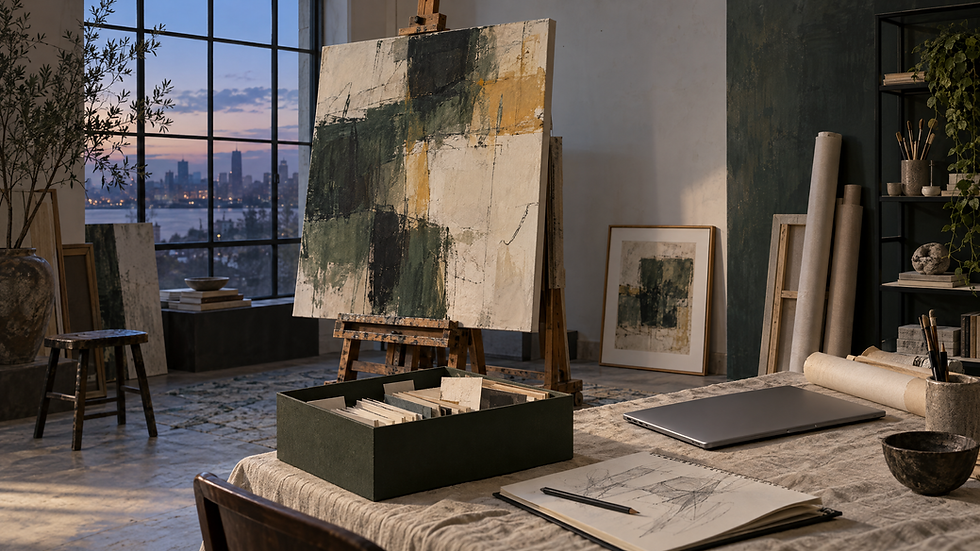
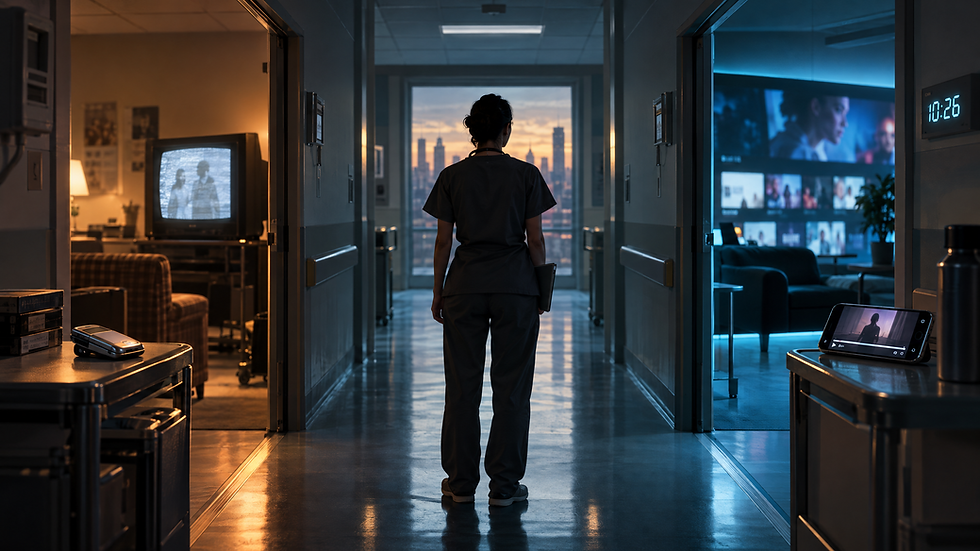
Original editorial illustration.
Date line: October 13, 2026 | New York
The final rooms of the 2026 Whitney Biennial closed yesterday. What remains is not a verdict on a season, but a question that has become sharper without the galleries: what does a museum mean when it calls art “American”? The Whitney presented this eighty-second edition as a survey of art in the United States while bringing in artists whose practices took shape in places marked by U.S. power, from Afghanistan to Vietnam. [1] The proposition was not a cosmopolitan flourish. It asked whether America is better understood as a mesh of military, economic, familial and cultural relations than as a clean line at the edge of a map.
That is a necessary challenge to the old national survey. It is also a perilous one. A museum can use its frame to make obscured histories legible; it can just as easily make other people’s histories attest to American consequence. The distinction turns on the particulars that institutional language often passes over: who gets to establish the terms, how much time and historical grain a work receives, and whether “transnational” names a relation among people or gathers them under the prestige of a U.S. museum.
The national frame has a history
American is not an incidental word in the Biennial’s title. The Whitney traces the exhibition to 1932, when Gertrude Vanderbilt Whitney’s invitationals showed work made within the preceding two years. Its present all-media, biennial survey format dates from 1973; more than 3,600 artists have appeared in an Annual or Biennial. [2] A tradition of this scale gives public shape to a present tense: it decides whose experiment, grief, labor and imagination can stand for the country.
For 2026, Marcela Guerrero and Drew Sawyer, working with Beatriz Cifuentes and Carina Martinez, selected 56 artists, duos and collectives. [1] [6] A selection becomes an argument through its apparatus—checklist, floor plan, label, catalogue essay, performance series and the pace imposed on a visitor moving from room to room. The Whitney has retained those materials, including wall texts, an audio-guide transcript and event records. [3]
The shift this time was not the abandonment of the U.S. survey. It was the admission that U.S. power has helped make cultural life outside its formal territory. Such an admission offers a more exact account of artists shaped by migration, colonial rule, military presence, territories and diasporas. It should not, however, turn any artist into an emissary for a nation, a conflict or a community they did not elect to represent.
When the frame becomes a circuit
Published criticism indicates that the strongest works made this widened category materially felt. The Art Newspaper describes Mao Ishikawa’s photographs of Black U.S. soldiers and local people in Okinawa as records of intimacy formed within a prolonged military presence, not illustrations of a tidy geopolitical lesson. [4] In that account, “American” ceases to be a passport test. It becomes the route by which racial hierarchy, desire and armed force travel—and leave unequal traces.
Aki Onda’s 2026 re-presentation of Filipino composer José Maceda’s Ugnayan set another kind of circuit in motion. Maceda’s 1974 composition was broadcast in twenty parts through twenty Manila radio stations; at the Whitney, twenty tape decks reassembled its dispersed score. The work carries the Marcos regime’s appropriation of avant-garde culture and the Philippines’ position in a U.S. Cold War alliance. [4] Nothing about that history makes the composition American. Its placement in an American survey instead tests the museum’s willingness to let an artwork retain its own dense political and sonic lineage.
Nor was its original public form a mere technical trick: 142 Ugnayan centers across Manila asked residents to bring transistor radios and listen together. Onda has described those gatherings as a question the 2026 staging must carry forward. [9]
National art history has often relegated foreign policy to backdrop and treated culture as domestic self-expression. These works reverse the scale: infrastructure, war, communication and attachment become part of the picture. The category widens not because the world arrives at the Whitney, but because the United States was already present in histories that a national museum must learn to read.
The domestic is not the opposite of the geopolitical
The Biennial’s most productive complication was its refusal to reserve structure and violence for work made elsewhere. D’Souza’s account of David L. Johnson’s Rule gives the point a local, almost bureaucratic form: signs taken from privately owned public spaces enumerate what bodies may not do—lie down, camp, skateboard, remove objects from trash. Maia Chao’s related score asks a visitor to imagine touching a museum artwork they are forbidden to touch. [7] The works turn rules into objects of scrutiny. They also make visible a condition that any public museum shares: access is organized through property, security, behavior and permission.
The same pressure appears across different materials and scales. The Art Newspaper describes Nani Chacon’s sculptures as bringing Diné visual language into contact with electrical towers on Navajo Nation land, where transmission infrastructure is tied to coal refineries. [4] In this context, “American” is not an elevated adjective for a canon. It names a contested landscape of energy, extraction and visual authority. The work does not require the Biennial’s transnational premise to be political; it makes clear why the premise cannot safely divide a domestic United States from an external field of intervention.
This matters because the language of the international can create a misleading hierarchy of attention. A museum may become eloquent about U.S. power when it is visible in Afghanistan, Okinawa or the Philippines, then speak more softly about the structures that govern public space, Indigenous land or municipal labor nearer to home. The 2026 Biennial’s strongest recorded juxtapositions suggest another possibility: America is not a bounded centre looking outward but a set of systems that organize unequal proximities. That account permits works to be intimate, comic, abstract or mournful without evacuating the forces around them.
Context is the point of disagreement
Critics did not agree that the Biennial met that demand. R.H. Lossin, writing in e-flux, found parts of the sixth-floor installation lucid but judged the museum’s language of mood and relationality too diffuse for its political material. The critic singled out the placement of Basel Abbas and Ruanne Abou-Rahme’s work as a situation in which a lack of context risked turning Palestinian experience into an institution’s evidence of openness. [5] The force of that objection lies not in a border-policing idea of who belongs at the Whitney, but in a question of display: does inclusion give a work room to signify, or make it perform the museum’s ethical breadth?
That concern did not arrive in a vacuum. In 2025, the Whitney suspended the next iteration of its Independent Study Program after cancelling a performance on Palestinian mourning; Lossin treated that institutional record as part of what made the Biennial’s language of mood and relationality feel politically insufficient. [5] [10]
Other independent criticism saw the same curatorial field otherwise. In Hyperallergic, Aruna D’Souza found the exhibition’s concerns with infrastructure and relation legible in its installation, rather than constraining. Her account of David L. Johnson’s removed rules from privately owned public spaces and Maia Chao’s score for a museum visitor brought power down to the level of permitted gestures, surveillance and everyday conduct. [7] Ania Szremski in 4Columns likewise read the Biennial’s stylized and indirect approaches as distinctly political, locating U.S. military presence in works tied to Okinawa, Afghanistan and Iraq. [8]
This is not an argument about whether art ought to deliver a slogan. It is an argument over where political meaning resides: in explicit institutional explanation, in a work’s formal pressure, or in the friction between them. Lossin’s warning is indispensable, because the language of openness can be a thin substitute for historical specificity. D’Souza and Szremski are equally useful, because a demand for permanent declaration can miss what image, installation and sound can make perceptible. A responsible national survey must sustain both truths. It must not aestheticize political conditions; nor should it require artists to translate all their work into policy speech.
The institutional mechanics matter here. A biennial does not simply assemble objects that already mean the same thing. It determines adjacency, duration, interpretive language and the density of attention allotted to a work. For works such as Ugnayan, whose first life was dispersed across Manila’s radio airwaves, or Ishikawa’s photographs, whose visual field holds military occupation and personal encounter together, that setting changes the terms of reception. [4] The public stake is therefore not an abstract debate over representation. It is whether viewers are given enough context to recognize that a work has a history before the museum and a life beyond its category.
No exhibition can provide the full history of every relation it invokes. Nor is exhaustive explanation synonymous with care. But institutions with the Whitney’s authority can make their choices more accountable: by retaining primary materials, foregrounding artists’ own accounts, naming the circumstances that shape a work, and accepting criticism as part of the exhibition’s afterlife rather than an interruption to it. The 2026 record offers the beginnings of that task. It also makes plain how much depends on the difference between a capacious frame and a consuming one.
The archive after the closing date
The 2026 Biennial cannot settle the definition of American art. Its more durable achievement is to make the category answerable. Its final partial presentation ended October 12, but the checklist, wall texts, audio transcript and catalogue record continue to offer a public trail through the curators’ decisions. [1] [3] Readers can now examine that trail and watch whether future Biennials make the selection terms as visible as the selections themselves.
The question is not whether American art is somehow global. It is whether an American museum can name the United States with enough precision to acknowledge the people, places and asymmetries that name has touched—and with enough humility to let those histories exceed its walls.
Sources & records
1. https://whitney.org/exhibitions/2026-biennial "Whitney Biennial 2026 — official exhibition record"
2. https://whitney.org/exhibitions/the-biennial "The Whitney Biennial — official institutional history"
3. https://whitney.org/press/2026-biennial "Whitney Biennial 2026 — official press record and documentation"
4. https://www.theartnewspaper.com/2026/06/01/2026-whitney-biennial-exhibition-review-five-themes "The 2026 Whitney Biennial in five key themes — The Art Newspaper, June 1, 2026"
5. https://www.e-flux.com/criticism/6782395/whitney-biennial-2026 "Whitney Biennial 2026 — R.H. Lossin, e-flux Criticism, March 5, 2026"
6. https://www.artforum.com/news/whitney-biennial-reveals-artists-for-2026-edition-1234740743/ "Whitney Biennial Announces Artists for 2026 Edition — Artforum, December 15, 2025"
7. https://hyperallergic.com/the-polycrisis-sublime-of-the-whitney-biennial/ "The Polycrisis Sublime of the Whitney Biennial — Aruna D’Souza, Hyperallergic, March 5, 2026"
8. https://4columns.org/szremski-ania/whitney-biennial-2026 "Whitney Biennial 2026 — Ania Szremski, 4Columns, April 10, 2026"
9. https://whitneymedia.org/assets/generic_file/5075/Audio_Guide_Transcript_-_Whitney_Biennial_2026.pdf "Whitney Biennial 2026 Audio Guide Transcript — Whitney Museum of American Art"
10. https://hyperallergic.com/whitney-museum-suspends-independent-study-program/ "Whitney Museum Suspends Independent Study Program — Rhea Nayyar, Hyperallergic, June 2, 2025"

$50
Product Title
Product Details goes here with the simple product description and more information can be seen by clicking the see more button. Product Details goes here with the simple product description and more information can be seen by clicking the see more button

$50
Product Title
Product Details goes here with the simple product description and more information can be seen by clicking the see more button. Product Details goes here with the simple product description and more information can be seen by clicking the see more button.
$50
Product Title
Product Details goes here with the simple product description and more information can be seen by clicking the see more button. Product Details goes here with the simple product description and more information can be seen by clicking the see more button.

Comments