After New Humans, the New Museum Faces an Old Question: How New Must New Art Be?

Cultural Analysis
The New Museum’s reopening show used history to challenge technological amnesia; now its larger building must show how that historical reach serves living artists and the public.
This is a records-based, post-exhibition analysis, not an attendance-based review. The headline has been reframed from the original news peg because the New Museum’s official record says New Humans: Memories of the Future remained on partial view only through August 30, 2026; it was no longer open on this article’s October 13 publication date.[1]
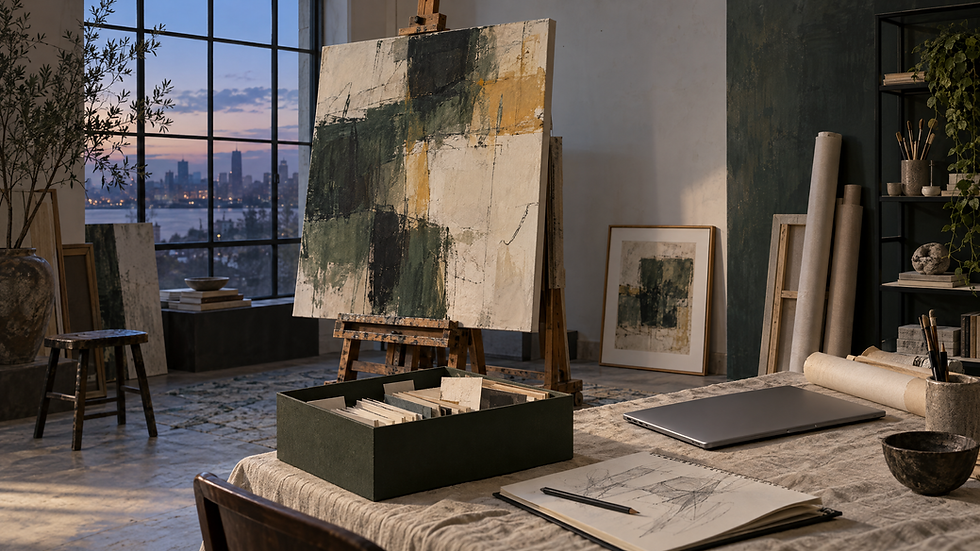
Original editorial illustration.
New York — October 13, 2026
A reopening makes a claim
When the New Museum reopened on March 21 after a two-year closure, it staked its enlarged future on an old question: who gets counted as human when machines, medicine, and capital redraw the body? OMA’s 60,000-square-foot addition doubled the Bowery institution’s exhibition space. Its inaugural survey, New Humans: Memories of the Future, used that enlarged frame for a cross-century argument about altered bodies and social futures.[2] [3]
The exhibition is now gone. Its official record says the final partial presentation ended August 30.[1] But the opening choice remains consequential because the New Museum is a non-collecting institution committed to contemporary art, new production, and experimentation.[4] New Humans instead placed recent commissions amid historical art, scientific images, architecture, film, and design. It proposed that the future has a long visual memory—and that the premise of absolute novelty is often a convenient fiction.
That is a needed corrective in a season of inflated claims about artificial intelligence, automation, biotechnology, and climate technology. Yet it is also an institutional wager. A museum built to make room for living artists used its first expanded season to stage a historical survey with the intellectual weight, and some of the optics, of a collecting museum.
The past did not leave the room
The curatorial team assembled more than 200 artists, writers, scientists, architects, and filmmakers, with more than 15 new commissions, around reproduction, prosthesis, robotics, and imagined other lives.[2] The record puts Wangechi Mutu, Berenice Olmedo, Hito Steyerl, and Anicka Yi in the company of Hannah Höch, Ibrahim El-Salahi, Kiki Kogelnik, and Salvador Dalí.[1] Such proximity can interrupt the amnesia built into contemporary technology’s self-advertising. It makes clear that fantasy, dread, and the remaking of bodies did not begin with a chatbot.
The strongest material in this argument makes technology social rather than scenic. Frieze singled out Steyerl’s Mechanical Kurds and Stephanie Dinkins’s work for exposing how machine intelligence rests on racialized and precarious labor.[7] ArtReview went further, arguing that a universal account of “humanity” risks obscuring the difference between people enclosed by technological systems and those who design or profit from them.[8] Its point matters: a museum cannot leave power implicit when it asks viewers to imagine the human anew.
The show contained evidence for that sharper reading. Independent accounts describe Steyerl’s commission as following Kurdish refugees represented as Amazon microworkers; Olmedo’s use of medical devices made for children places assistance, abandonment, and bodily interdependence in the same field of vision.[6] These are not decorative instances of a “posthuman” theme. They identify the people whose labor and care are too often hidden beneath the polished surface of technological progress.
The body is not an abstract frontier
The exhibition’s historical method could have made this politics unusually vivid. The twentieth century did not merely supply a storehouse of retrofuturist forms. It produced mass industrial warfare, new regimes of bodily classification, assembly-line discipline, disability politics, and the visual technologies that helped administer all of them. In ArtReview’s reading, the adjacency of interwar images of wounded or reconstructed bodies and later work on mechanized labor supplied a missing counterpoint to a frictionless story of invention.[8] That is more than contextual decoration. A prosthesis does not mean the same thing to a veteran compelled to adapt to injury, a child whose device is discarded as they grow, a factory worker measured by output, and an artist treating an artificial limb as a sculptural relation. The category becomes ethically thin when these positions are collapsed.
This is where historical montage, a form with its own lineage in Dada and Surrealism, can do serious work. Its collision of periods need not produce a cheerful equivalence between past and present. At its best, the technique makes continuities uncomfortable: the automated gesture and the algorithmic task; the medical image and the managed body; the fantasy of a machine servant and the worker made temporarily invisible inside it. Frieze saw the show’s strongest works refusing the simple opposition of flesh and mechanism.[7] The question for an institution is whether such refusal makes the systems around those bodies more legible, or only more atmospheric.
That distinction is crucial for a general audience because “the future” is often used to evade responsibility in the present tense. An art exhibition cannot adjudicate how Amazon, an AI company, a hospital, or a government treats people. It can, however, alter the frame through which viewers recognize those systems. A commission about data tagging has public force not because it predicts a distant posthuman condition, but because it returns intelligence to the people whose repetitive acts help construct it. A sculpture made from a pediatric medical device is not proof that technology saves or harms. It asks who owns the tools through which a body is described, supported, or discarded.
The cost of being encyclopedic
No contemporary museum should be barred from historical comparison. “New” is not a production date. It can describe a changed relation to the past: a chance to see an emerging practice outside the thin horizon of trend, or to recover artists omitted from familiar accounts of modernity.
But the New Museum’s mechanics make the choice unusually exposed. As a non-collecting museum, it cannot simply draw such a survey from storage. The history on view arrives through loans, negotiations, installation labor, and a finite exhibition calendar. Artforum’s account of the opening captured the unease this produced: guests wondered why a museum founded to support unfamiliar art had foregrounded so much earlier material, and whether the contemporary work could withstand the comparison.[5]
That concern is not a call to police chronology. It is a question of allocation. When a thematic panorama fills a new building, individual works can become illustrative evidence in an argument rather than encounters with their own pressure and pace. Frieze found the survey’s historical pairings illuminating but judged its density capable of crowding out individual discoveries.[7] Ocula, by contrast, treated its 732 works as an audacious abundance and found its unlikely pairings newly legible.[6] The disagreement is productive: scale changes the conditions under which attention can be given.
The disagreement also names a curatorial risk particular to museums at moments of expansion. A vast inaugural exhibition is an efficient way to demonstrate capacity: it tests new circulation routes, delivers a visual event, and announces that the institution can convene loans and commissions at an international scale. But a gallery full of proof can begin to resemble an argument that has not been edited. Hyperallergic’s editors criticized both the density of the galleries and the apparent pressure placed on visitors to process long wall texts; their responses are interpretive, not a survey of all visitors, but they point to a basic curatorial responsibility.[9] Looking is paced. It needs intervals, sightlines, seats, and the permission to remain with a work longer than an installation photograph allows.
For the New Museum, that issue has a historical resonance. Its founding identity was built around artists and practices that larger institutions had not yet absorbed. A reopened museum need not repeat 1977. The field has changed; so have the conditions of visibility, production, and circulation. But the founding problem remains recognizable: whether an institution’s most adventurous claims create exposure for artists who lack it, or consolidate a canon after its risks have already been absorbed elsewhere. A historical survey can revise that canon. It should not become a substitute for the risk of supporting work before consensus arrives.
A public building has material tests
The $130 million expansion added more than galleries: three elevators, a 74-seat forum, an artist-residency studio, a plaza, and a permanent home for NEW INC, the museum’s art, design, and technology incubator.[2] These are not backdrop. They are the infrastructure through which an institution can decide whether “new” means an artist has time to work, a student can enter a conversation, or a visitor can move through the building without friction.
That question cannot be settled by renderings or opening-week rhetoric. Hyperallergic’s editors, writing from the reopening, reported crowded galleries, difficult wayfinding, and concern about a retained staircase between the third and fourth floors that wheelchair users cannot use. The museum’s accessibility page says that all gallery levels are elevator-served and wheelchair accessible, while specifically identifying art installed in that North Building stairwell as inaccessible by wheelchair.[9] [10] Those are reported critical observations, not a full accessibility audit, but they sharpen the point that circulation is a cultural question as well as an architectural one. The museum has also announced free public-school tours, monthly free family days, and pay-what-you-wish Thursday evenings.[2] Their worth will be determined by continuity, staffing, and whether the audiences invited through the door can shape what happens after it.
What remains after the future closes
The afterlife of New Humans should not be a demand for the New Museum to forsake ambitious history. Its lesson is more exacting. Historical breadth earns its place when it enlarges the possibilities for artists working now, and when it identifies the unequal terms on which people meet technology rather than smoothing those terms into a generic “we.”
The first post–New Humans test is already in progress. Since September 25, the building’s current program has paired Arthur Jafa’s I Am Tony with exhibitions by Diego Marcon and Ho Tzu Nyen, as well as The Bowery: Devil’s Mile.[11] Readers can watch those seasons for evidence: clear accounts of commissions and artists’ working conditions; public uses for the residency studio, forum, and NEW INC; and programs in which people with knowledge of labor, disability, migration, and care are more than case studies. The exhibition made a defensible claim that newness is memory under pressure. The larger building must now show that its historical ambition creates room for the people making the present, not merely a grander stage on which to name them.
Sources & records
1. https://www.newmuseum.org/exhibition/new-humans-memories-of-the-future/ "New Museum: New Humans: Memories of the Future"
2. https://www.newmuseum.org/press-release/new-museum-inaugurates-oma-designed-building-expansion/ "New Museum: New Museum Inaugurates OMA-Designed Building Expansion"
3. https://www.newmuseum.org/about/building/ "New Museum: Building"
4. https://www.newmuseum.org/about/ "New Museum: About"
5. https://www.artforum.com/columns/linda-yablonsky-diary-new-museum-reopening-1234746172/ "Artforum: What’s Old Is New Again: Surrealists and Robots at the Newer New Museum"
6. https://ocula.com/magazine/opinion/new-museum-reopens-epic-new-humans-new-york/ "Ocula: Make It Big: New Museum Reopens with an Epic Overview of Humanity"
7. https://www.frieze.com/article/new-humans-memories-of-the-future-2026-review "Frieze: New Humans: A Hallucinatory Humanism Worth Moving Towards"
8. https://artreview.com/the-robots-were-never-the-problem-new-humans-new-museum-new-york/ "ArtReview: The Robots Were Never the Problem"
9. https://hyperallergic.com/what-do-we-really-think-of-the-new-new-museum/ "Hyperallergic: What Do We Really Think of the New New Museum?"
10. https://www.newmuseum.org/visit/accessibility/ "New Museum: Accessibility"
11. https://www.newmuseum.org/exhibitions/ "New Museum: Exhibitions"

$50
Product Title
Product Details goes here with the simple product description and more information can be seen by clicking the see more button. Product Details goes here with the simple product description and more information can be seen by clicking the see more button

$50
Product Title
Product Details goes here with the simple product description and more information can be seen by clicking the see more button. Product Details goes here with the simple product description and more information can be seen by clicking the see more button.
$50
Product Title
Product Details goes here with the simple product description and more information can be seen by clicking the see more button. Product Details goes here with the simple product description and more information can be seen by clicking the see more button.

Comments