When a Biennial Leaves the Church: What Does Manifesta Owe the Ruhr?

Reported Explainer | Post-event Accountability Analysis
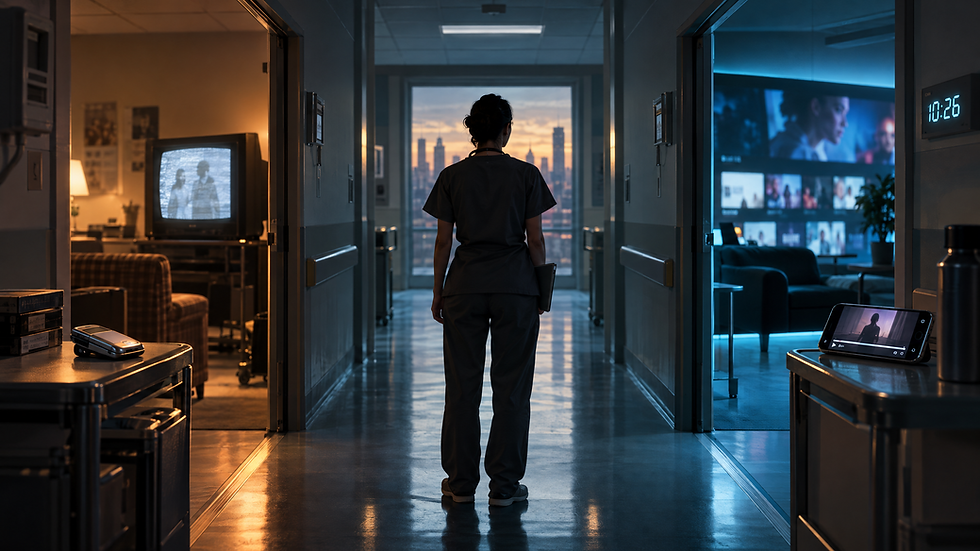
Image disclosure: This is an original editorial illustration, not a documentary photograph, artwork reproduction or exhibition view.
After Manifesta 16 Ruhr, the test is whether its church venues remain useful, accessible neighborhood infrastructure.
Scope note: This records-based analysis covers Manifesta 16 Ruhr after its close and does not claim firsthand attendance or offer an exhibition review. Public sources document the biennial’s ambitions and completed programs, but do not establish a single verified post-event operating plan for every site; that limit is central to the accountability question.
Manifesta 16 Ruhr ended on 4 October 2026. From 21 June, the nomadic European biennial worked across twelve church buildings in Duisburg, Essen, Gelsenkirchen and Bochum, pairing contemporary art with gatherings, workshops and neighborhood programs. The buildings did not share one status: some were closed or underused, some retained religious use, and some already had a cultural life. That distinction matters. A cultural event can make a place visible, but visibility is not the same as stewardship.
The building is the argument
Manifesta describes itself as a biennial that relocates every two years and works with local and international partners around social, political and cultural questions. For Ruhr, it framed twelve postwar and older church buildings as potential communal infrastructure. Its official account says the project grew from pre-biennial investigation and citizen consultations, and that the buildings were rethought as places for dialogue, cohesion and artistic innovation. That ambition is serious because the decline of congregations has left many European towns facing a practical question: what becomes of a building built for collective life when its original institution no longer fills it?
The Ruhr is not a neutral backdrop for that question. Industrial restructuring, migration, religious change and a dense urban geography have shaped its neighborhoods for generations. Several of the selected churches sit in districts with distinct histories rather than in a single art district. A fair assessment therefore cannot reduce the edition to an itinerary of striking interiors. It has to ask whether the temporary public attention created conditions for durable local use, and whether local organizations gain something more lasting than an international spotlight.
Temporary activation is not a handover
A biennial can accomplish real things in a limited season. It can pay artists and producers, introduce audiences to overlooked architecture, put conversations in rooms that had fallen quiet, and give local partners a platform. None of those outcomes should be dismissed. But they are different from a handover. Long-term reuse depends on ownership, maintenance, heat, insurance, accessibility, programming staff, trusted local partners and a clear right to decide what happens next. The public record available after the close does not yet provide a single site-by-site plan answering those questions for all twelve venues.
This is where post-event language needs precision. A church used for an exhibition can be called activated. A church with funding, responsible stewardship, regular community access and an agreed future program can be called a continuing civic resource. The distance between those descriptions is not semantic. It is paid work, public governance and the everyday reliability that allows a room to become part of neighborhood life.
What independent criticism adds
Independent criticism has treated the gap as an important part of the story. In Frieze, Ben Livne Weitzman praised site-responsive installations and the free-entry policy while arguing that the biennial’s larger promises of communal transformation remained largely symbolic; he also noted uneven German-language access in some video works. The Architectural Newspaper likewise described mixed results and pressed a different question: when a project is framed as community building, what is the practical rationale for a temporary art use in a place that may already have an emerging local future? Those are assessments, not settled facts. They are valuable because they test the rhetoric of infrastructure against conditions a visitor can actually encounter.
The disagreement is not simply between supporters and detractors of contemporary art. It concerns delivery. A commission can be artistically compelling and still leave a vague institutional afterlife. Conversely, a modest collaboration can matter if it helps an existing group secure space, skills, visibility or resources on terms that group controls. The strongest legacy claims will be the ones that distinguish those outcomes rather than grouping them together under the word community.
Twelve venues, twelve thresholds
The official venue records make a single legacy claim impossible to sustain. St. Josef in Gelsenkirchen closed in 2023 but remains consecrated and unused; its parish house had served as Manifesta’s headquarters since summer 2025. During the biennial, the site hosted family activities, student presentations and recurring basketball sessions with Social BallerZ. That is a meaningful record of temporary use. It does not, by itself, identify who will hold the keys, fund maintenance or convene the next program after the production team leaves.
Kulturkirche Liebfrauen in Duisburg presents the opposite problem. It is partly deconsecrated but still contains rooms used for religious services; its Upper Church was already an art and cultural centre intended to encourage dialogue between religions and cultures. A serious legacy account there cannot describe Manifesta as the building’s rescue. It should ask whether the edition strengthened an existing civic ecology, respected the building’s continuing religious life and left partners with usable resources rather than a brief period of attention.
These differences do not weaken the premise of the Ruhr edition. They make the premise more demanding. A post-event account should separate buildings that are closed, underused, already in cultural use, still partly religious or facing a specific redevelopment decision. It should state whether a partnership was newly created, extended or simply displayed. Otherwise reuse becomes a mood shared across very different legal, financial and social situations.
A practical standard for accountability
The useful next document would be public, site-specific and readable without specialist vocabulary. For each principal venue and each 16+ project, it should name the owner or steward, state the status after 4 October, describe agreed use and access conditions, identify the decision timetable, record funded partnerships and acknowledge gaps in continuation. It should also distinguish paid work from volunteer labor, describe accessibility measures and report what participants said did not work. A catalogue can preserve the event. It cannot substitute for a handover record.
Access belongs in that record as more than a footnote. During the exhibition, Manifesta differentiated among wheelchair-accessible buildings, partly accessible buildings and sites without accessible toilets. The usefulness of a future room will depend on whether those facts are retained, improved or allowed to disappear with temporary production infrastructure. Ordinary opening hours, language provision, safeguarding and the price of entry matter for the same reason: a building has not become neighborhood infrastructure simply because it was publicly activated for one season.
On 7 October, organizers opened an anonymous public survey about the exhibition, venues and programs. That invitation is a useful beginning. It is not yet the site-specific continuation plan this question requires: the notice provides neither results nor handover details. The fairest conclusion, only days after the close, is neither triumph nor failure. Manifesta 16 made an urgent regional problem visible and created a public test for its own ambition. What it owes the Ruhr now is evidence of what remains, who controls it and who can use it.
Sources & records
1. Manifesta 16 Ruhr, About — https://manifesta16.org/about
2. Manifesta 16 Ruhr, St. Josef venue record — https://manifesta16.org/venues/st-josef
3. Manifesta 16 Ruhr, Kulturkirche Liebfrauen venue record — https://manifesta16.org/venues/kulturkirche-liebfrauen
4. Manifesta 16 Ruhr, public survey notice, 7 October 2026 — https://manifesta16.org/news/so---how-was-it
5. Ben Livne Weitzman, Frieze review, 25 June 2026 — https://www.frieze.com/article/manifesta-16-2026-review
6. Tim Abrahams, The Architectural Newspaper, 4 August 2026 — https://www.archpaper.com/2026/08/manifesta-16-churches/

$50
Product Title
Product Details goes here with the simple product description and more information can be seen by clicking the see more button. Product Details goes here with the simple product description and more information can be seen by clicking the see more button

$50
Product Title
Product Details goes here with the simple product description and more information can be seen by clicking the see more button. Product Details goes here with the simple product description and more information can be seen by clicking the see more button.
$50
Product Title
Product Details goes here with the simple product description and more information can be seen by clicking the see more button. Product Details goes here with the simple product description and more information can be seen by clicking the see more button.


Comments