Frieze London’s Curated Sections Promise Art History—Can a Fair Deliver It?
As Frieze London and Frieze Masters open in Regent’s Park, their new research-led sections make a serious claim for the fair as a place where historical narratives can be revised—while leaving open who can enter, present and test those narratives.
Scope note: This is a records-based analysis published as Frieze Week begins; it does not claim firsthand attendance. It distinguishes official programme information from independent coverage and is current to 14 October 2026.

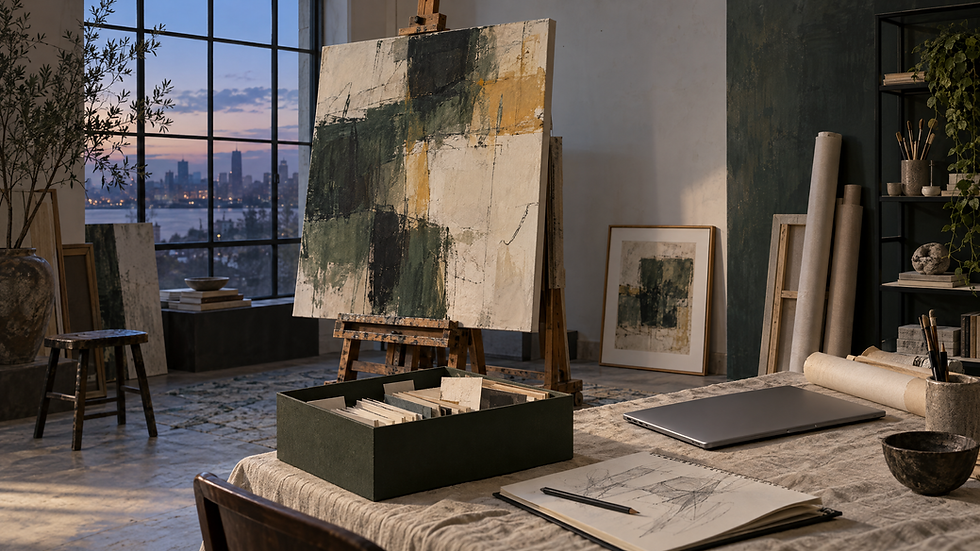
Original editorial illustration; not a documentary photograph, artwork reproduction or view of the fair.
14 October 2026
The question arrives before the doors open
Frieze London and Frieze Masters begin their 14–18 October run in Regent’s Park today, with member access beginning on Wednesday and preview and general-admission access following on the fair’s published schedule. Frieze casts the paired fairs as a conversation across time, bringing galleries from 48 countries and regions into proximity; Dezeen reduces the arrangement to its useful basic grammar: Frieze London for contemporary work, Frieze Masters for art history. [1] [2]
But the consequential action is inside the tents. This year’s programme asks a commercial fair to do work usually entrusted to museums, archives and universities: to revise the field of vision through which artists, geographies and social histories become central. Commerce does not disqualify that labour. Galleries fund scholarship, recover estates and sometimes place demanding work before wide audiences. Yet a fair is an architecture of speed and property. Its historical argument is assembled from discrete, saleable presentations, selected by a fair and met in a few days.
The stake reaches beyond the buyer’s preview. A fair may direct curators, writers and institutions toward work that has circulated poorly; it may also compress complex history into a glancing visual signal. The question is whether “discovery” leaves durable traces—in catalogues, collections, teaching and later exhibitions—or remains a polished name for a selling week.
Three sections, three different arguments
At Frieze London, The Code Universe, organized by Beijing-based curator Carol Yinghua Lu, brings eight artists from the late 1970s to the present into relation with consumer goods, media imagery and information flows. Its presentations include Shinro Ohtake, Carolyn Lazard and Nikita Kadan. This is not a total account of popular culture. It is a deliberately narrow proposition about artists registering the production, circulation and consumption of its images. [7] [16]
The other London sections reveal different forms of authority. Artist-to-Artist gives seven established artists the power to nominate a solo presentation. Focus, for galleries founded within the last 12 years, contains 34 presentations selected by a committee of a museum curator and gallerists. [7] [10] Such structures are not neutral measures of importance; they are ways of directing attention through professional trust. That need not invalidate the work. It does make the agents of canon formation visible.
Frieze Masters states its historical ambition with greater force. Queering Modernism: Visual Languages of the 20th Century, conceived by Anke Kempkes, runs across the fair rather than occupying a single enclave. Frieze says it foregrounds queer experience and LGBTQIA+ representation; the current fair record identifies seven presentations, including a Bahman Mohassess presentation developed with the artist’s estate and a dialogue between Claude Cahun and Judy Chicago. [1] [14] The distribution may set unexpected works against one another. It may also leave visitors with fragments where an argument requires sequence and context.
Spotlight, now at its largest scale and curated by Courtauld scholars Devika Singh and Sofia Gotti, takes up 22 solo presentations of mid-century artists from South Asia, South America, Europe, North and West Africa and East Asia, largely between the 1950s and late 1970s. [1] [15] Its premise is not regional absence from art history but uneven institutional and market attention. A booth can make a practice newly legible; it cannot furnish the archive, extended interpretation or public collection that historical repair demands.
That limit need not make the sections ornamental. The fair can place specialist dealers, artists’ estates, curators and researchers in proximity, allowing a work to move from private stock into a scholarly conversation. Yet, where a museum exhibition can develop an argument through rooms, loans, texts and a catalogue, a fair disperses its evidence among commercial addresses. Historical precision therefore falls heavily on the dossier, provenance record, label and surrounding conversation. To invoke a revised canon without such supports is to ask geography or identity to stand in for interpretation.
There is a further distinction worth holding onto. “Global” describes a field, not an argument about it; “queer” is neither a synonym for hiddenness nor a marketing adjective for modernity. The sections must make particular histories and formal decisions apprehensible—how an image was made, circulated, suppressed, exhibited or read—not simply make a name newly available to a market.
Selection and money shape the historical picture
Frieze discloses more of its machinery than many cultural institutions. Its London selection committee is dominated by commercial-gallery leaders, with CAPC Bordeaux’s chief curator; the Masters committee combines dealers and an art historian. Independent curators advise the feature sections. [9] [10] This is not a public-commission system. It is a market structure into which curatorial interventions have been fitted, and its claims should be read through both facts at once.
That structure gives urgency to the price of visibility. A fair requires work to register quickly amid hundreds of displays and asks galleries to bear the cost of that urgency. The Art Newspaper reported that Frieze London’s subsidised Focus rate was £276 per square metre in 2025, down from £338 in 2021, though a 30-square-metre booth still cost £8,280 before other expenses. It also reported bursary support for Focus and Artist-to-Artist, without disclosed sums. [6]
The broader pressure is severe. Reporting based on small gallerists’ accounts finds that booth fees, freight, lighting and staffing can take total fair costs above $20,000, even when the professional visibility is judged worth the risk. [8] That does not establish Frieze’s 2026 costs—the public visitor pages do not publish comparable rates. It does explain why a canon-expanding section must be judged partly by which galleries can afford to remain visible within it.
The comparison between Frieze’s account and independent reporting is clarifying. The fair emphasizes discovery, international exchange and research; Artforum confirms its scale and mix of global and established galleries. [5] The Art Newspaper supplies what this language leaves out: the square-metre arithmetic that can determine whether an emerging programme is viable. [6] Curation here is not a layer applied after commerce. It is shaped from the outset by the resources required to occupy a place in the plan.
Small-gallery provisions deserve neither reflexive celebration nor dismissal. Focus rates and bursaries can lower a real barrier; they cannot dissolve costs of crating, insurance, travel, staffing, installation or a poor fair. The question is whether temporary assistance changes the field’s structure, or enables a precarious entrant to survive another season within it.
The afterlife is where the claim becomes public
There are existing mechanisms that complicate the blunt opposition between fair and public institution. The Contemporary Art Society’s Collections Fund at Frieze has partnered with Frieze London since 2016. It is a purchase prize for a major work by a living artist: one member museum is selected each year to acquire from Frieze London or Masters after a short research programme, with a curator travel bursary; the museum remains responsible for transport, crating and conservation. The scheme brings private patrons and museum curators into the research process. [12] This is not the same as a museum exhibition, and it is not a guarantee of broad access. It is, however, a concrete route by which a work shown in a sales context can enter a public collection and gather a longer institutional life. Its living-artist remit also means that it cannot, by itself, demonstrate an afterlife for the many historical figures at issue in Spotlight or Queering Modernism.
The 2026 Art Fund Curators Programme makes a parallel investment in the people who interpret collections. It offers 10 funded places for UK curators and up to eight for international curators whose collections are open to the public, covering travel, two nights’ accommodation and fair access. Its sessions move between collection care, commercial and vetting practices, loans, partnerships and research. [11] The programme is necessarily selective; 18 places cannot settle who gets to speak for art history. Still, it recognizes a fact that the fair’s public rhetoric sometimes obscures: access to art also depends on the material capacity of curators to travel, meet dealers and examine work.
The fair’s wider programme extends beyond the booth. Frieze lists an onsite commission by Gray Wielebinski, Masters Talks on canon expansion and museum displays, an ICA film programme, and a nonprofit takeover of its Reading Room. [13] These occasions for argument should sharpen, not soften, the demand that historical claims in the tents be sustained by intelligible research.
Public access is more than a ramp
Frieze’s physical-access provisions are substantial: ramps, hearing loops, accessible toilets, seating, wheelchair loans and free companion or carer tickets after the visitor has booked their own ticket. [4] Those arrangements are real forms of care, not a footnote.
They do not dissolve the price of entry. Weekend full-price admission is £48 for one fair or £92 for both; student combined admission is £32. Wednesday entry with a guest and unlimited re-entry comes through Frieze Connect membership, starting at £990. [3] Nearby, Frieze Sculpture in the English Gardens is free through 1 November. [1] The contrast marks the boundary between outdoor encounter and the fair’s concentrated historical argument.
Not every cultural encounter must be free. But an institution claiming to enlarge historical knowledge should make clear how people outside collecting and trade networks can encounter and dispute it. Labels, talks, published research, school partnerships and durable digital records would carry the argument beyond the sales floor. The relevant standard is not purity from commerce; it is whether commerce becomes the sole condition under which research can be seen, argued with and remembered.
What to watch this week
The telling measure will not be a sales tally. It will be whether research becomes legible: which sources and collaborators are named; whether social and political contexts are interpreted rather than used as atmosphere; and whether galleries can build on the attention after the tents come down. The queer and global-modernist claims should register as historical method, not decorative branding. It will also be worth watching which presentations generate loans, acquisitions, publications or further exhibitions—forms of attention that do not end when a stand is dismantled.
A fair can make a consequential beginning. Its compressed social field brings dealers, artists, scholars, institutions and general visitors into unusual proximity. It cannot finish art history in five days. Frieze’s sections will matter most if they open onto longer, public-facing work—and if the people invited into that work are not limited by the market structure that made the display possible.
Sources & records
[1] Frieze, “Frieze London and Frieze Masters 2026 Celebrate Global Artists and Histories,” 11 June 2026. https://www.frieze.com/article/frieze-london-and-frieze-masters-2026-celebrate-global-artists-and-histories
[2] Dezeen Events Guide, “Frieze London 2026.” https://www.dezeen.com/eventsguide/2026/10/frieze-london-2026/
[3] Frieze, “Frieze London & Frieze Masters Ticket Page.” https://www.frieze.com/fairs/frieze-london-frieze-masters/tickets
[4] Frieze, “Accessibility | Frieze London and Frieze Masters 2026.” https://www.frieze.com/fairs/frieze-london-frieze-masters/accessibility
[5] Artforum, “Frieze London, Frieze Masters Name Participants in 2026 Editions,” 11 June 2026. https://www.artforum.com/news/frieze-london-frieze-masters-name-2026-participants-1234752202/
[6] Anna Brady, “Greater balance and fairness in stand pricing brings diverse galleries to Frieze London,” The Art Newspaper, 16 October 2025. https://www.theartnewspaper.com/2025/10/16/greater-balance-and-fairness-in-stand-pricing-brings-diverse-galleries-to-frieze-london
[7] Frieze, “The Next Generation of Artists Lead Frieze London 2026,” 11 June 2026. https://www.frieze.com/article/frieze-london-2026-curated-sections-next-generation-artists
[8] Chris Erik Thomas, “How Much Art Fairs Really Cost, According to Small Galleries,” Artsy, 28 February 2025. https://www.artsy.net/article/artsy-editorial-art-fairs-cost-small-galleries
[9] Frieze, “About: Frieze Masters.” https://www.frieze.com/fairs/frieze-masters/about
[10] Frieze, “About: Frieze London.” https://www.frieze.com/fairs/frieze-london/about
[11] Art Fund, “Art Fund Curators Programme at Frieze Masters,” 2026. https://www.artfund.org/professional/get-funding/programmes/art-fund-curators-programme-at-frieze-masters
[12] Contemporary Art Society, “Collections Fund at Frieze,” 2026. https://contemporaryartsociety.org/museums/special-projects/collections-fund
[13] Frieze, “Frieze London & Frieze Masters 2026 Programme.” https://www.frieze.com/fairs/frieze-london-frieze-masters/programme
[14] Frieze, “Queering Modernism | Frieze Masters 2026.” https://www.frieze.com/fairs/frieze-masters/queering-modernism-2026
[15] Frieze, “How the Curated Programme at Frieze Masters Is Rewriting Art History,” 11 June 2026. https://www.frieze.com/article/how-curated-programme-frieze-masters-rewriting-art-history
[16] Frieze, “The Code Universe | Frieze London 2026.” https://www.frieze.com/fairs/frieze-london/code-universe-2026

$50
Product Title
Product Details goes here with the simple product description and more information can be seen by clicking the see more button. Product Details goes here with the simple product description and more information can be seen by clicking the see more button

$50
Product Title
Product Details goes here with the simple product description and more information can be seen by clicking the see more button. Product Details goes here with the simple product description and more information can be seen by clicking the see more button.
$50
Product Title
Product Details goes here with the simple product description and more information can be seen by clicking the see more button. Product Details goes here with the simple product description and more information can be seen by clicking the see more button.

Comments