The Soft Architecture of Benni Bosetto’s Milan

Cultural Analysis | Art, Space and Relation
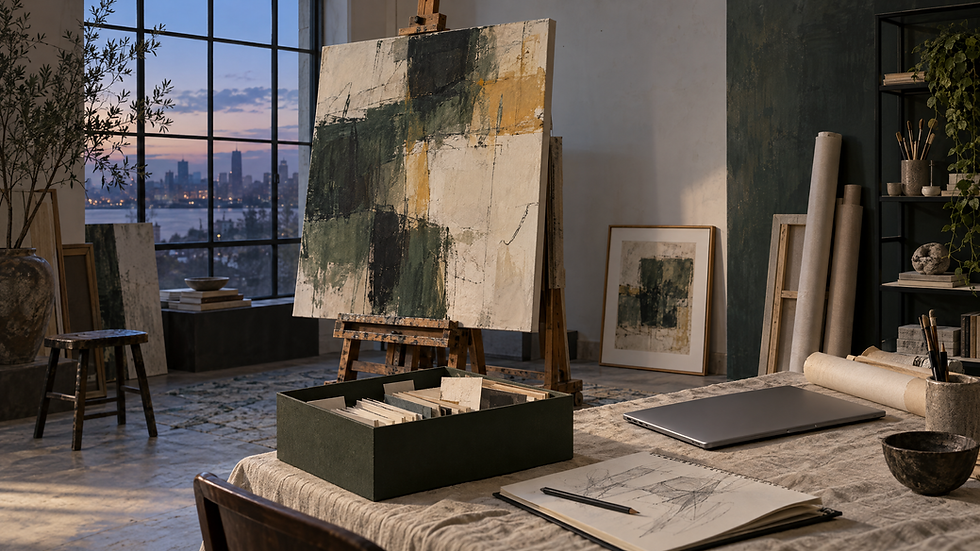
Image disclosure: This is an original editorial illustration, not a documentary photograph, artwork reproduction or exhibition view.
In Rebecca, her first major institutional exhibition, Benni Bosetto converted a former locomotive shed into a body-house of hand-painted paper, low thresholds and scheduled dance. The point was not comfort as décor. It was to test whether an interior can make time, desire and social relation felt differently.
This is a source-led assessment of Rebecca, which ran at Pirelli HangarBicocca from 12 February to 19 July 2026. It draws on the exhibition’s documentation and independent criticism; it does not claim a visit or firsthand attendance.
When Rebecca closed in July, it left a useful question behind: what, exactly, does it mean to make an exhibition “soft”? Benni Bosetto’s answer was neither a pastel mood nor a retreat from seriousness. It was a material proposition. In Pirelli HangarBicocca’s Shed, the Milan-based artist used hundreds of hand-painted paper strips, fabric partitions, lowered doors, old and new sculpture, and a weekly tango performance to convert a vast industrial volume into something more vulnerable and less stable: an interior that behaved like a body.[1]
The occasion matters because Rebecca, curated by Fiammetta Griccioli, was Bosetto’s first major institutional exhibition.[1] But it also matters because the building is almost comically resistant to the usual language of intimacy. The Shed began life as part of Breda’s Bicocca works, where components for locomotives and agricultural machinery were manufactured; the broader district was remade after industrial decommissioning into a mix of university buildings, offices, housing and cultural infrastructure.[2] A domestic environment placed there can easily read as a lifestyle vignette against the factory’s brick and steel. Bosetto’s more ambitious move was to refuse that clean opposition. Her soft architecture does not conceal the factory so much as make its scale answerable to a hand, a surface and a schedule.
A house that does not settle down
The exhibition took its title from Daphne du Maurier’s 1938 novel Rebecca, in which a house retains the force of a woman no longer present. Pirelli HangarBicocca framed Bosetto’s version as an “architectural female body”: a tripartite organism divided into la guancia (the cheek), la pancia (the belly) and il cuore (the heart).[1] That reading is useful, though it risks making the body sound like a curatorial diagram. The stronger idea is that architecture here does not simply contain a body, or represent one. It sets the conditions by which a visitor must register scale, proximity and permeability.
The entry work, La bocca (2022), was documented as a sheet of iridescent, scale-like fabric carrying a large circular eye. It offered an important correction to the convention of the visitor as master observer: before the show became an interior, it gave the interior an organ that watched back.[3] Around it, Le cellule (2026) covered the Shed’s walls. Frieze counted 260 vertical strips, hand-painted with anatomical fragments, aphrodisiac and invasive plants, and collaged jewellery; the institution describes further marks of kisses, nipples, the recurring letter R and plants associated with fertility, persistence, dreams or oblivion.[1] [4]
That density is the show’s real architecture. Paper does not have the authority of masonry, and Bosetto uses its weakness. A strip can overlap, wrinkle, repeat, hang like a curtain or read as wallpaper. It can be pattern and membrane at once. The hand is legible not as a signature flourish but as accumulated duration: independent critic Riccardo Conti places the laborious strips against the fantasy of mechanically produced decoration, while Bosetto has described the large-scale drawing process as a kind of diary composed over time.[5] [6] This is why the word “soft” deserves more than its design-world association with upholstery and mood. The show turns ornament into a working surface, one that retains contact and resists instant legibility. Conti also places that choice against the longer devaluation of ornament as feminine or pathological, making Bosetto’s refusal of a clean split between decorative surface and “rational” structure a gendered proposition, not merely a stylistic one.[5]
Conti’s report also gives that labour a biographical, rather than merely stylistic, line: he notes that Bosetto’s father was a decorator and wallpaper hanger, citing the exhibition catalogue.[5] The detail is instructive because it keeps Le cellule from becoming a generic revival of maximalism. Pattern is not a decorative surplus applied after the serious spatial decision. It is the means by which space is made specific, time-consuming and bodily scaled.
The long route to the Shed
This was a museum-scale escalation, not a sudden change of medium. Bosetto, born in Merate in 1987 and based in Milan, studied painting and then sculpture at Brera; in Florida at Tile Project Space in 2016, she already covered the gallery in hand-drawn paper.[3] Her 2022 performative work Stultifera, staged at Bologna’s Pinacoteca Nazionale during Art City, assembled literary, theatrical, cinematic, musical and dance references around Sebastian Brant’s Ship of Fools.[7] The through-line is a practice that treats exhibition-making as a score for objects, surfaces and people rather than as an orderly sequence of autonomous works.
That matters for how the older pieces functioned in Rebecca. In the cheek, veiled partitions and seating surrounded sculptures whose materials include bronze, iron, ceramic and pomegranate branches. The institutional guide identifies Confessionale animale as a fabric-and-paper corridor marked by the artist’s childhood practice of kissing a bedroom doorframe; nearby heart-shaped stools were deliberately sized for dogs and cats.[3] These details could be misread as quaint autobiography. More productively, they establish an anti-monumental scale: a room is not only a room for an upright adult human. It is a place organized by habits, dependent creatures, lowered voices, accidental touch and minor rites.
The central belly makes the point more forcefully. Bosetto laid nine new works from Le porte (2026) horizontally across a green-carpeted space. Doors ordinarily manage access and exclusion; hers become containers for small arrangements, including older work recast within the new setting.[4] In the exhibition guide, Bosetto calls them interfaces for care and coexistence, explicitly invoking the boxed constructions of Joseph Cornell and Fausto Melotti’s miniature theatres.[3] A threshold that cannot be opened does not become useless. It becomes a site that has to be approached from above, around or by bending down.
Bosetto put that physical adjustment succinctly in a February conversation: horizontal doors become “fields, gardens, cemeteries,” and bending changes perception.[6] The statement is more revealing than the show’s abundant symbolism. Softness here is not frictionless access. It is a refusal of the vertical, efficient doorway—the form that sorts people into inside and outside—and an invitation to look at an object as a habitat rather than as a sealed possession. For collectors as much as for exhibition designers, that is a useful complication: a bronze, ceramic or paper work in Bosetto’s orbit gains force from the relations it stages, not from isolated preciousness.
The risk inside the refuge
The heart, where Tango (II version) took place, makes clear that the house was intended to be social rather than simply private. The installation recreated a milonga with tables, chairs, a stage, soft lighting and a dance floor. Once each week, amateur performers danced tango in headdresses suggesting animals, birds, insects, molluscs and small terrestrial landscapes; the piece had an earlier performance form at Castello di Rivoli in 2024.[3] Its reference to tango was not ornamental either. The guide situates the form’s history in late-19th- and early-20th-century Buenos Aires and Montevideo, shaped by encounters among local African communities and European immigrants.[3]
Still, the heart exposes the exhibition’s most credible limit. The institution described a welcoming refuge for rest, dreaming and relation. Frieze, while admiring the paper installation’s tactile domestic force, found that it could also produce an “oppressive sense of enclosure”; it further observed that the dance room was essentially empty between performances, except for the dancers’ headdresses.[4] Federico Giannini’s dissenting review in Finestre sull’Arte went further, arguing that the domestic premise became self-referential and that the social claim of the milonga was unavailable outside its weekly, approximately two-hour activation.[3] [8]
The latter is a judgment, not a settled verdict. Yet it identifies a formal problem worth taking seriously: an environment cannot simply declare itself hospitable. It must negotiate the gap between staged invitation and actual use. Bosetto’s answer was conditional rather than seamless. A visitor encountered traces, props and an anticipated choreography on most days, and living bodies only at set times. That incompleteness may frustrate the promise of collective ease. It also prevents Rebecca from resolving into an image of domestic harmony. The house remains a score with absences; desire is not guaranteed by a red tablecloth, a curtain or a soft surface.
This tension is precisely where Bosetto’s achievement survives the exhibition’s closure. Her work refuses the common equation of care with polish, and of political feeling with a blunt message. It insists instead that care has a spatial grammar: a membrane is both boundary and contact; a door can hold as well as bar; decoration can carry labour; a room can make absence palpable. The argument is especially pointed in Milan, where interiors are readily treated as visual evidence of taste. Rebecca proposes a less marketable standard. An interior becomes meaningful not when it photographs as an atmosphere, but when its materials alter how bodies wait, look, rest and meet.
That is why a serious reader should care now. Bosetto is building a language for an art world increasingly fluent in immersive environments but still too willing to mistake immersion for experience. Her contribution is not another spectacular room. It is a more demanding proposition: that softness has a structure, a cost in time, and an ethics of attention. In the Shed, the former factory did not become a home by forgetting what it had been. It became a testing ground for whether a public institution can make room for vulnerability without turning it into a consumable look.
Sources & records
1. https://pirellihangarbicocca.org/en/exhibition/benni-bosetto/ "Pirelli HangarBicocca: Benni Bosetto, Rebecca"
2. https://pirellihangarbicocca.org/en/history-of-the-building/ "Pirelli HangarBicocca: History of the building"
3. https://web-assets-hangarbicocca.pirelli.com/wp-content/uploads/2026/02/Benni-Bosetto-Exhibition-guide.pdf "Pirelli HangarBicocca: Benni Bosetto, Rebecca — Exhibition guide"
4. https://www.frieze.com/article/benni-bosetto-rebecca-2026-review "Frieze: Benni Bosetto Recasts the Gothic Body"
5. https://www.moussemagazine.it/magazine/benni-bosetto-riccardo-conti-pirelli-hangarbicocca-milan-2026 "Mousse Magazine: Benni Bosetto, Rebecca at Pirelli HangarBicocca, Milan"
6. https://www.koozarch.com/interviews/is-this-seat-taken-lunch-benni-bosetto-asad-syrkett-latteria-san-marco "KoozArch: Is This Seat Taken? Lunch with Benni Bosetto and Asad Syrkett"
7. https://cultura.gov.it/evento/art-city-2022-stultifera-di-benni-bosetto "Italian Ministry of Culture: Art City 2022, Stultifera di Benni Bosetto"
8. https://www.finestresullarte.info/en/exhibition-reviews/benni-bosetto-at-hangarbicocca-when-the-contemporary-digs-inside-an-innocuous-bric-a-brac "Finestre sull’Arte: Benni Bosetto at HangarBicocca"

$50
Product Title
Product Details goes here with the simple product description and more information can be seen by clicking the see more button. Product Details goes here with the simple product description and more information can be seen by clicking the see more button

$50
Product Title
Product Details goes here with the simple product description and more information can be seen by clicking the see more button. Product Details goes here with the simple product description and more information can be seen by clicking the see more button.
$50
Product Title
Product Details goes here with the simple product description and more information can be seen by clicking the see more button. Product Details goes here with the simple product description and more information can be seen by clicking the see more button.


Comments