Where Does an Art Fair End and a City Begin? Art Basel Paris Tests the Boundary

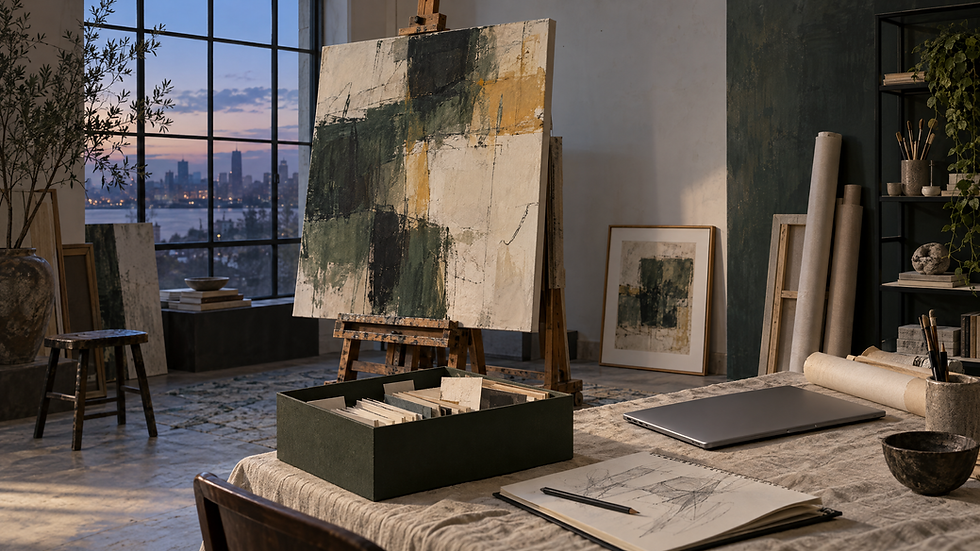
Original editorial illustration; not a documentary photograph, artwork reproduction or view of the fair.
Format: News Analysis
Deck: The 2026 edition extends Art Basel Paris beyond the Grand Palais again, but the meaningful question is not whether art reaches the street; it is what kind of public relationship survives when galleries, brands, museums and municipal space share the frame.
Scope note: This is a records-based advance analysis, written before the 2026 fair opens. It does not claim firsthand attendance, assess the works in person, or predict sales. The title’s premise has been sharpened rather than abandoned: the fair’s move into Paris is not new—Art Basel’s 2025 public program was already described as free and open to all—but 2026 makes the boundary more visible through an expanded nine-venue program and a new director. [1] [3] [6]
Date: 14 October 2026
The Grand Palais has a useful kind of grandeur for an art fair: it makes commerce look like a civic occasion. Under its glass nave, the private negotiations, borrowed works, shipping schedules and professional hierarchies of the market acquire the atmosphere of a public gathering. Art Basel Paris has learned to work with that contradiction. For its fifth edition, opening to the public from 23 to 25 October, the fair brings 211 galleries from 41 countries and regions into the Grand Palais. But it also distributes a parallel program through nine Paris locations, including squares, gardens, the Petit Palais, the Beaux-Arts de Paris, the Palais d’Iéna and the route that joins the Grand Palais to its smaller neighbour. [1] [2]
The familiar language for this maneuver is spillover: the fair spills into the city. It is too passive a word. What is being arranged is a temporary civic image. Art Basel Paris is asking viewers to see the avenue, the parvis and the institution not merely as destinations near the fair but as extensions of its cultural field. The question is therefore not whether a sculpture outside has somehow escaped the market. It is whether a commercial event can make a public encounter whose terms are legible to people who did not arrive as collectors, VIPs, or art-world professionals.
That question has stakes beyond a week of cultural programming. Paris is already dense with museums, galleries, foundations and art schools. An independent 2025 critic’s guide in Frieze, published during the prior edition, moved between major institutions, commercial galleries and foundation spaces; its very structure registered an art city larger than any one fair. [8] When a fair describes itself as part of that city, it enters an existing ecology of public provision, private capital, scholarship, local audiences and working artists. It does not simply animate an empty stage.
The program is a precedent, not an annex
Art Basel’s own 2025 record matters because it corrects an easy story of novelty. Last year’s program was also billed as free and open, with outdoor work on Avenue Winston-Churchill, projects in major institutions, and Miu Miu’s commission at the Palais d’Iéna. [3] The 2026 dossier says the program is expanded and concentrated around the Grand Palais, with its first presentation at the Parvis des Droits de l’Homme. That is a development, but not an invention. The fair’s current experiment is better understood as a repeated proposition: can the commercial fair become a conductor of public culture without confusing visibility with publicness? [1]
The distinction matters because public space is not a neutral plinth. At the Jardin de la Nouvelle-France, Boz Deseo Garden’s Celia, or the Misfortunes of Virtue is a pair of steel sculptures modeled on a lightning rod recovered from the Bristol Channel. Art Basel’s dossier connects the channel to the transatlantic slave trade and notes the colonial naming and statuary already present in the garden. The work therefore arrives in a site whose historical meanings cannot be treated as pleasant scenery. [1]
At the Chapelle des Petits-Augustins, Kutluğ Ataman’s Küba is a 40-screen installation built from the testimonies of residents of a former Istanbul settlement formed by people fleeing political persecution. The work’s formal premise—many monitors, mismatched seating, voices that overlap rather than resolve into a single representative account—makes listening a spatial task. Its inclusion in a fair-week route may introduce the project to viewers who would not otherwise seek it out. It also puts a work about displacement, poverty and self-representation beside a highly concentrated circuit of international mobility and cultural prestige. Neither fact cancels the other. [1]
This is where art-historical specificity earns its place. Public sculpture is often discussed as though its force were exhausted by scale or photogenic placement. Yet a parvis, a garden and a chapel produce different kinds of spectatorship: passing, resting, detouring, gathering, leaving. Tracey Emin’s three bronze figures open on the Parvis des Droits de l’Homme on 14 October and run through 1 November, before and after the fair’s public days. In the official account, their changing poses move from a prone body to kneeling and seated forms; the longer duration gives that sequence a chance to meet a public beyond the fair’s compressed timetable. [1]
Avenue Winston-Churchill presents the most direct test. The street connecting the Grand Palais and Petit Palais will host projects by Marcello Maloberti, Yinka Shonibare, Simone Fattal, Niki de Saint Phalle, Manfred Pernice, Alicja Kwade, Carmen Herrera and Keita Miyazaki. Designboom independently describes this installation route as free-access. Its content is not incidental: Pernice’s four concrete benches are explicitly both seating and sculpture, while Miyazaki’s installation joins recycled car parts to pleated Japanese paper. Those are invitations to pause and to read urban materials differently, not simply large objects placed along an already elegant thoroughfare. [1] [5]
The commercial frame does not disappear outdoors
The program’s candor about sponsorship is, in one sense, useful. White Cube presents Emin’s bronzes. Almine Rech presents Robert Indiana’s LOVE Wall at Place Clemenceau. Petzel, Gaga and Neu present Cosima von Bonin’s project at the Petit Palais. The named galleries are not hidden backstage; their participation establishes a chain of custody, resources and attribution. [1]
There is no serious reason to pretend that galleries should not support ambitious public presentations. They hold expertise, relationships with artists and estates, and often the capacity to move difficult work. Nor should every gallery credit be read as evidence that a work has been reduced to an advertisement. But the credits illuminate the central tension. The fair is not suspending the dealer system when it crosses a street. It is giving that system a different public face.
Miu Miu’s commission makes the point more sharply. The fashion house is the official partner of the public program and has invited filmmaker Alice Diop to make Geste de Consolation at the Palais d’Iéna, seat of France’s Economic, Social and Environmental Council. The project brings film, photographs, poetry, dance, music and performance into a sequence of spaces, with contributions from Zanele Muholi, Mary Lee Bendolph, Nadia Beugré, Angel Bat Dawid and others; Simone Leigh’s Sentinel (Mami Wata) concludes the itinerary. Diop frames the project around acts of consolation conceived by Black women artists. It opens from 21 to 25 October. [1]
Miu Miu is in its third year as the public program’s official partner, and Diop’s commission extends the dialogue of Fragments for Venus, her 2025 film for the company. The relationship between the project’s artistic premise and its sponsor is therefore structural, not incidental. The practical record is more nuanced than a registration requirement suggests: the exhibition is free from 10am to 7pm from 21 to 25 October, while all guided-tour slots have already been booked. [9]
The project should be considered on the terms of its artistic proposition, rather than dismissed by association with a sponsor. Its cross-disciplinary form has the potential to make an argument about looking, repair and the institutional framing of Black women’s work. But this is also exactly where publicness becomes a matter of procedure. Can a casual visitor understand the conditions of entry, the role of the company, the institutional host and the program’s credits? Does the encounter retain room for unplanned attention rather than operating chiefly as a branded appointment? These are not cynical questions. They are the conditions under which cultural access becomes more than an image of access.
The fair’s own thresholds remain visible. A day at the Grand Palais costs €47, with a €30 reduced ticket for students, visitors under 26 and certain Louvre-card holders; the preview is invitation-only, and the vernissage ticket costs €120. By contrast, Art Basel states that its Conversations panels in the Grand Palais Auditorium are free and open to the public. [1] That mixed structure is not a scandal. It is the actual design of the event. It asks a visitor to navigate several different publics: the paying public of the fair, the invited preview public, the walk-by public of a sculpture route, the free walk-in public and tour-limited public of a commission, and the audience of free talks.
A fair must not be mistaken for the city it visits
Independent coverage supplies a useful counterweight to Art Basel’s own expansive rhetoric. The preview in Fucking Young! portrays 2026 as a “temporary cultural map,” emphasizing the way the fair offers reasons to move through Paris rather than remain under the Grand Palais roof. [4] Designboom similarly gives the city route concrete shape, naming works, sites and access. [5] Both accounts help explain the attraction of the program. Neither needs to be rejected for being sympathetic to reveal the question left open: a temporary map is not the territory it maps.
That distinction becomes clearer when set against criticism of Art Basel’s Swiss edition. In a reported feature from Basel in June, Hyperallergic described a fair ecosystem under pressure to secure attention in a volatile market. Its strongest observation was not that all fair art is spectacle, but that focused presentations can resist the demand to shout. [7] Paris cannot simply be treated as Basel in another venue, and the report does not establish Paris booth costs or audience behavior. Still, it clarifies why outdoor monumentality needs careful reading. The spectacular can make art available in a new register; it can also convert civic space into a relay for the competition to be noticed.
The leadership transition adds a smaller but real reason to watch. ArtReview reported that Karim Crippa, previously Art Basel Paris’s head of communications and a senior editor at Art Basel, succeeded founding director Clément Delépine in November 2025. [6] It would be unfair to turn a single edition into a verdict on his directorship. Yet a new director inheriting an established public program has an opportunity to move its measure beyond scale, attendance imagery and proximity to famous institutions.
The decisive questions are practical and aesthetic at once. Do the sites provide clear credits, opening times, access information and meaningful contextual text? Are the works allowed to rub against the histories of their locations rather than smooth them into cultural scenery? Does the program leave audiences with reasons to return to partner institutions after the fair has gone? And can a person who never passes through the Grand Palais understand that the artworks before them are more than ornaments for art week?
Art Basel Paris does not need to become a municipal cultural service to make a serious public program. It needs, instead, to accept the exacting standard created by its own ambition. If the fair is to extend into the city, the city must remain more than its backdrop: a place with prior histories, independent institutions, contested meanings and publics that do not owe their attention to the art market.
Sources & records
[1]: https://www.artbasel.com/stories/art-basel-paris-2026-press-dossier?lang=en — Art Basel Paris 2026 Press Dossier
[2]: https://www.artbasel.com/stories/art-basel-paris-2026-gallery-list-announcement?lang=en — Art Basel announces exhibitors for Art Basel Paris 2026
[3]: https://www.artbasel.com/stories/art-basel-paris-2025-public-program?lang=en — Art Basel Paris 2025 Public Program
[4]: https://fuckingyoung.es/everything-you-need-to-know-about-art-basel-paris-2026/ — Fucking Young!: Everything You Need to Know About Art Basel Paris 2026
[5]: https://www.designboom.com/art/designboom-paris-guide-design-miami-art-basel-2026/ — designboom: Paris guide for Design Miami and Art Basel Paris 2026
[6]: https://artreview.com/art-basel-paris-picks-new-director-karim-crippa/ — ArtReview: Art Basel Paris picks new director
[7]: https://hyperallergic.com/in-a-volatile-market-art-basel-galleries-bet-on-our-attention/ — Hyperallergic: In a Volatile Market, Art Basel Galleries Bet on Our Attention
[8]: https://www.frieze.com/article/critics-guide-paris-2025 — Frieze: The Best Shows to See in Paris
[9]: https://www.miumiu.com/us/en/miumiu-club/special-projects/geste-de-consolation.html — Miu Miu: Geste de Consolation

$50
Product Title
Product Details goes here with the simple product description and more information can be seen by clicking the see more button. Product Details goes here with the simple product description and more information can be seen by clicking the see more button

$50
Product Title
Product Details goes here with the simple product description and more information can be seen by clicking the see more button. Product Details goes here with the simple product description and more information can be seen by clicking the see more button.
$50
Product Title
Product Details goes here with the simple product description and more information can be seen by clicking the see more button. Product Details goes here with the simple product description and more information can be seen by clicking the see more button.

Comments