Before You Share an Election Claim: A Voter’s Guide to Information, Process and Dignity
CIVIC EXPLAINER | ELECTION INFORMATION
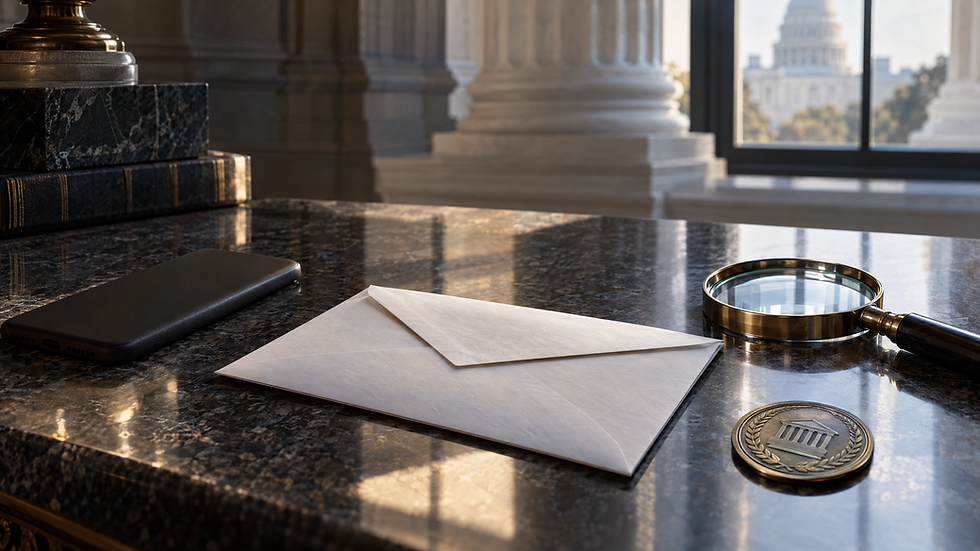
Image disclosure: This is an original editorial illustration, not a documentary photograph, party advertisement, or official election notice.
In an anxious election season, accurate information is not a luxury. It is part of the practical dignity of being able to participate without confusion, humiliation, or fear.
This article is nonpartisan voter education. It does not endorse candidates, parties, ballot positions, or a preferred method of voting.
Election seasons create a strange kind of noise. The news cycle moves fast. A video from an unfamiliar precinct travels farther than an explanation from the office that runs it. A changed voting location becomes a rumor that no one will be allowed to vote. A delayed result becomes proof, for someone, that the process has failed.
The human cost of that noise is easy to miss. A person may be working a shift, arranging child care, recovering from illness, caring for an older parent, or trying to understand a system they have not used since the last election. They do not need a lecture about being more discerning. They need clear information that tells them what applies where they live and what to do next.
That is why election information is not just a technical subject. It is a question of civic dignity.
A new AP-NORC poll helps explain why the atmosphere feels so charged. In interviews conducted October 8–12 with 1,119 adults, 85% of voters named the economy and 84% named cost of living among the country’s most important issues for their vote. Health care was a top issue for 69%. Two-thirds said they felt pessimistic about the state of U.S. politics. Those numbers do not tell us what every voter believes, or which candidate anyone should support. They do show that people are approaching this election while carrying real pressure from ordinary life.
When people are already worried about rent, groceries, insurance, safety, war, work, or family, a vague or misleading claim about voting can land with more force than it deserves. The answer is not to demand blind faith in institutions. It is to put questions in the right place: with the official office responsible for the rule, a reliable local source that can explain it, and the specific facts of the jurisdiction involved.
What makes an election claim worth checking
Not every mistake online is a coordinated effort to mislead. Some misinformation begins with a sincere misunderstanding: an unfamiliar ballot procedure, a photo without context, a line outside a polling place, or a local rule incorrectly carried over from another state.
But the distinction between an honest mistake and a deliberate falsehood does not change the first responsibility of a reader. Before sharing, ask whether the claim tells you which state, county, date, and election it is about. If it cannot identify those basics, it is not yet useful enough to treat as a guide.
The Brennan Center’s October report on the 2026 midterms describes a recurring pattern. Misleading claims often track the election calendar and cluster around registration, mail voting, voting systems, and the counting of ballots. Its report also notes that procedures vary by state. That variation is precisely why a national social-media post can be misleading even when it describes something that happened somewhere.
A claim about one county’s polling location does not describe every county. A dispute about one state’s absentee-ballot deadline does not rewrite another state’s rules. A short video of an unusual moment at a polling site may show a genuine event, but it still may not explain what happened before or after the clip was recorded.
The most practical question is simple: Where is the official instruction for my address?
Start with the office that runs the process
For voting location and hours, USAGov directs voters to their state or local election office. It also notes that a polling place is based on a voter’s residential address and may change from one election to the next. Showing up at another location can lead to a provisional ballot, which may not count.
That is not an argument for complacency. It is an argument for checking early enough that a changed location, a missing document, a mail-ballot question, or an accommodation request does not become a crisis on Election Day.
A solid verification routine has three steps. First, locate the state or local election office for the voter’s home address. Second, look for information that is dated and specific to the current election: registration status, voting location, hours, accepted identification where applicable, mail-ballot deadlines, early-voting dates, and sample-ballot information. Third, if a social post makes a serious claim about a rule or a problem, compare it against that official source before passing it on.
This is not about treating official language as magic. Government websites can be hard to navigate, and local instructions can be badly written. It is about going to the place that can correct an error, explain a rule, or tell a voter where to get help. An influencer, a campaign account, or a viral video may raise a question. It cannot substitute for the office that administers the answer.
Process is often mistaken for proof
One of the easiest ways to fuel distrust is to make normal procedures look suspicious by removing their explanation.
Ballots do not all arrive at the same time, and states do not all handle them in the same way. The Brennan Center notes that voters use mail ballots, early in-person voting, and Election Day voting in different proportions. It also explains that many states allow election workers to process returned mail ballots before Election Day by checking eligibility information and scanning ballots without counting them. The purpose is to help results move more efficiently once polls close, not to announce a winner before voting ends.
That does not mean every administrative problem is imaginary. Polling-place changes, equipment issues, long lines, registration errors, and legal disputes are real problems when they happen. They should be reported, investigated, and addressed. But a problem is not automatically a system-wide plot, and an allegation is not evidence simply because it is emotionally satisfying or politically convenient.
Votebeat’s October survey of 31 election-law and administration experts is useful here because it does not treat uncertainty as a reason to make sweeping predictions. The publication says its survey was not scientific and disclosed that its respondents were disproportionately white, male, and moderate or liberal. The experts anticipated challenges and possible legal fights, while generally not expecting widespread disenfranchisement or invalid final results. The cautious lesson is not that nothing can go wrong. It is that real concerns should be investigated with evidence rather than inflated into certainty before the facts are available.
Accessible information is part of equal access
For someone with a flexible schedule and a car, a changed polling place may be an inconvenience. For a person who relies on paratransit, works hourly shifts, has limited mobility, is managing a disability, or is caring for children, it can be a much larger barrier.
USAGov states that voters with disabilities have the right to vote at an accessible polling place and advises people who need accommodations to contact their state or local election office. The Election Assistance Commission likewise defines voter education as nonpartisan, fact-based information about the time, date, and manner of voting, voting rights, procedures, and technology.
That definition is important. It recognizes that a right on paper is not enough if the information needed to use it arrives too late, is too confusing to act on, or is drowned out by content designed to provoke fear.
Clear voting information is not partisan simply because it helps people avoid a mistake. It is not an endorsement to explain where an assigned polling place is, how to request an accommodation, or why vote counting can take time. It is basic public service.
A better standard for sharing
The goal is not to silence skepticism. A healthy democracy needs people willing to ask whether rules are being followed and whether public officials are doing their jobs. The goal is to make skepticism more useful.
Before sharing an election claim, pause long enough to ask five things: Is it specific about the location, date, and type of election? Does it distinguish what is known from what is alleged? Is there an official local or state source that confirms or corrects it? Is the post describing an isolated event as if it explains an entire election? If a voter acted on this information today, would it help them vote correctly or make them more confused?
That last question brings the issue back to people. Misinformation does not have to persuade an entire country to do harm. It can be enough to make one person miss an updated deadline, doubt a valid process, or decide that asking for help will be embarrassing.
The U.S. Election Assistance Commission’s 2026 toolkit is designed around the opposite idea: election information should be understandable enough for voters and nonvoters to follow, and public explanations should help counter misinformation about pre- and post-election procedures. The most credible answer to a confusing claim is often not a louder counterclaim. It is a clear explanation of how the relevant process actually works.
Information that leaves room for people
This election will bring arguments that are serious, personal, and sometimes painful. Voters will disagree about the economy, immigration, public safety, health care, foreign policy, education, race, religion, and the future of democratic institutions. Those disagreements are not a failure of public life. They are part of it.
But people deserve to enter those disagreements with reliable instructions about the basic act of voting. They deserve to know where to go, what their local rules require, where they can get an answer, and when a claim has not yet earned their trust.
The strongest civic habit is neither cynicism nor blind confidence. It is the ordinary discipline of checking what is true, naming what remains uncertain, and refusing to make someone else’s confusion the price of participation.
Sources & further reading
AP-NORC, Ahead of the midterms, most voters cite the economy and cost of living as top issues: https://apnorc.org/projects/ahead-of-the-midterms-most-voters-cite-the-economy-and-cost-of-living-as-top-issues-and-favor-political-change/
Brennan Center, Anticipating Election Misinformation in the 2026 Midterms: https://www.brennancenter.org/our-work/research-reports/anticipating-election-misinformation-2026-midterms
U.S. Election Assistance Commission, Communicating Election and Post-Election Processes Toolkit: https://www.eac.gov/election-officials/communicating-election-and-post-election-processes-toolkit
U.S. Election Assistance Commission, Voter Engagement Guidance: https://www.eac.gov/grants/voter-engagement-guidance
USAGov, Find your polling place: https://www.usa.gov/find-polling-place
Votebeat, Experts say the midterms could face challenges, but are less concerned than in the spring: https://www.votebeat.org/national/2026/10/15/fall-2026-election-expert-survey-troops-polls-seize-ballots-voting-fraud/
This guide is for general voter education and is not legal advice. Rules and deadlines can change, so readers should consult their state or local election office for instructions that apply to their address.

$50
Product Title
Product Details goes here with the simple product description and more information can be seen by clicking the see more button. Product Details goes here with the simple product description and more information can be seen by clicking the see more button

$50
Product Title
Product Details goes here with the simple product description and more information can be seen by clicking the see more button. Product Details goes here with the simple product description and more information can be seen by clicking the see more button.
$50
Product Title
Product Details goes here with the simple product description and more information can be seen by clicking the see more button. Product Details goes here with the simple product description and more information can be seen by clicking the see more button.

Comments